



Solar Light and Intentional Living: Building a Calmer, More Energy-Aware Home
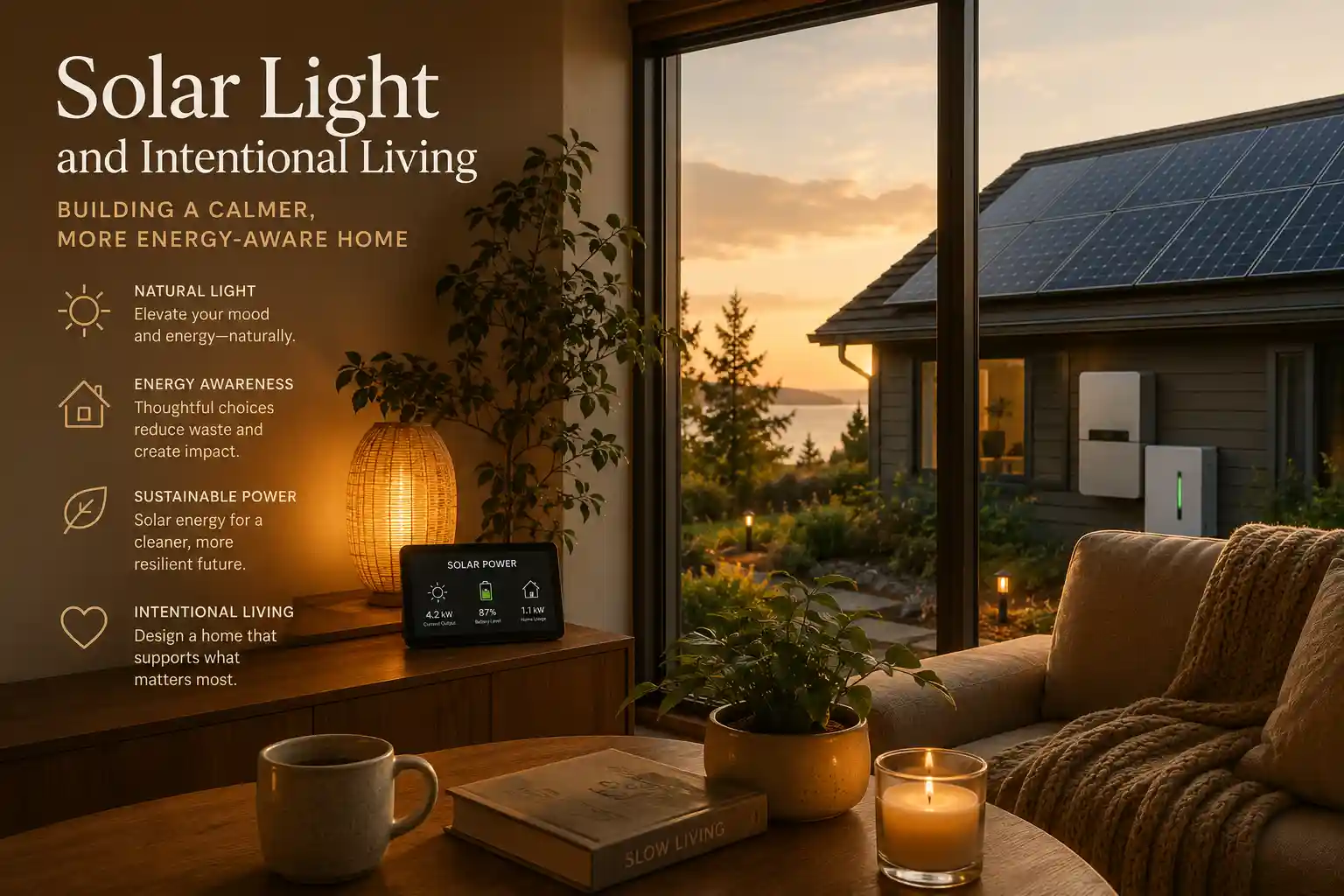
A calmer home often begins with the way light moves through it. For anyone exploring solar lighting or small home energy upgrades, this solar panel performance and selection guide helps explain how sunlight becomes useful power.
Intentional living is not only about candles, crystals, journals or quiet rituals. It can also include the practical choices we make around electricity, lighting, comfort and waste. A home can feel more grounded when its energy use supports daily rhythm instead of fighting against it.
Solar energy fits naturally into that conversation because it begins with something simple and ancient: the sun.
Conscious energy is not only spiritual language. It can also mean paying attention to the physical energy that powers the spaces where we rest, gather, create and heal.
Why Light Changes the Feeling of a Space
Light has a strong effect on how a room feels. Bright overhead lighting can make a space feel active and alert. Soft lamps, candles and warm accent lighting can make the same space feel slower, quieter and more personal.
Solar lighting adds another layer because it connects the home to the natural cycle of the day. A small solar lantern, patio light or garden pathway light gathers energy while the sun is available and gives it back after sunset.
Daylight as part of the room
Before adding any light fixture, it helps to notice how daylight already enters the home. Which rooms feel alive in the morning? Where does the afternoon sun land? Which corners feel heavy, dim or unused?
This simple observation can guide better design decisions. A reading area may belong near morning light. A meditation corner may feel better away from harsh glare. A plant shelf may need brighter natural exposure. A small solar light outdoors may work best where the panel gets direct sun instead of shade.
Evening light should feel intentional
After sunset, the goal is not always maximum brightness. Sometimes the right light is gentle, warm and placed low enough to soften the room. For bedrooms, altars, journaling spaces and quiet corners, lighting should help the body understand that the day is slowing down.
A small design note
If a light feels too harsh, the problem may not be the room. It may be the color temperature, direction or height of the fixture.
Where Solar Lighting Works Best Around the Home
Solar lights are not only for large energy projects. Small solar products can make everyday spaces more usable without adding new wiring or increasing the electric bill.
Garden paths and entryways
Path lights can create a safer, more welcoming approach to the home. They are especially useful along walkways, steps, side yards and entrances where a little visibility changes the whole feeling of arrival.
Patios and outdoor gathering spaces
Solar string lights, lanterns and wall lights can turn an outdoor area into a calm evening space for conversation, reading, prayer, reflection or simply sitting outside after a long day.
Altars, decks and ritual corners
For covered outdoor spaces, small solar-powered lamps can support quiet rituals without relying on extension cords. The key is to make sure the solar panel receives enough sun during the day, even if the lamp itself sits in a shaded or protected area.
Sheds, studios and creative spaces
A small solar panel kit can be useful for a shed, backyard studio, craft area or small workshop. These spaces often need only modest lighting or device charging, making them good candidates for beginner solar projects.
The best small solar project is not the most dramatic one. It is the one that quietly solves a daily problem.
Choosing Solar Lights With Care
Not all solar lights are equal. Some are decorative and soft. Others are designed for security, brightness or motion detection. A light that works beautifully in a garden may be disappointing near a driveway, and a bright security light may feel too aggressive near a peaceful seating area.
Match brightness to the purpose
- Soft garden glow: choose warm, low-output accent lights.
- Pathway safety: choose moderate brightness with consistent placement.
- Entry points: choose brighter lights near steps, gates or doors.
- Security areas: choose motion-sensor lights with stronger output.
- Quiet outdoor spaces: choose lanterns or string lights with a warmer tone.
Look at the battery, not only the lamp
Many small solar products fail because the battery is weak, undersized or not replaceable. A light may look beautiful during the first week but fade quickly if the battery cannot hold enough charge.
When possible, choose solar lights with replaceable rechargeable batteries. It can extend the life of the product and reduce waste.
Weatherproofing matters
Outdoor lights face rain, wind, dust, heat and cold. Check whether the product is designed for outdoor use, especially if it will sit fully exposed rather than under a porch or covered patio.
Solar Energy and the Idea of Stewardship
For many people, intentional living includes the desire to use less, waste less and live with greater awareness. Solar energy can support that mindset in a very practical way.
This does not mean every home needs a full rooftop solar system immediately. It may begin with smaller steps: outdoor solar lighting, better daylight use, lower-wattage bulbs, unplugging unused devices or choosing appliances more carefully.
Small choices can shift the atmosphere
A home that uses energy thoughtfully often feels different. Lights are placed with purpose. Devices are not always left running. Outdoor spaces are lit only where needed. The rhythm of the home starts to feel less automatic and more chosen.
Energy awareness begins when we stop treating power as invisible and start noticing how it supports our daily life.
Creating an Energy-Aware Ritual Space
A ritual space does not have to be elaborate. It may be a table, shelf, window corner, outdoor bench or small section of a bedroom. What matters is that the space feels clear, cared for and easy to return to.
Use natural light first
If possible, choose a place that receives gentle daylight. Morning light can feel fresh and activating, while late afternoon light may feel softer and more reflective.
Add low-energy lighting for evening use
Small LED lamps, solar lanterns or rechargeable lights can help create atmosphere without harsh brightness. Warm-toned light often works better than cool white light for rest, journaling, meditation or prayer.
Keep cords and clutter away
A calm space can lose its feeling quickly when tangled cords, chargers and outlets dominate the view. Wireless, rechargeable or solar-powered lights can sometimes help keep the area cleaner.
A simple weekly reset
Once a week, dust the surface, refresh the light source, remove anything that no longer belongs there and notice whether the space still supports the way you want to feel.
When a Small Solar Panel Kit Makes Sense
Solar lights are easy, but a small panel kit can support more practical uses. This may include powering a shed light, charging USB devices, running a small fan or keeping a battery maintained.
A basic small solar setup may include:
- One solar panel
- A charge controller
- A small battery
- Proper fuses or protection devices
- LED lights or DC loads
- Weather-safe wiring and mounting
This type of system should be planned carefully, even if it is small. The load, battery size, wire gauge and panel placement all matter.
Good uses for a small kit
- Lighting a backyard studio
- Charging phones during outdoor events
- Powering a small meditation shed or reading nook
- Maintaining a battery for emergency use
- Adding light to a garden structure without trenching wires
A Softer Checklist for Solar Choices
Before buying a solar light, lantern or small panel system, it helps to ask both practical and atmospheric questions.
Practical questions
- Where will the panel receive direct sun?
- How many hours of light are needed after sunset?
- Is the battery replaceable?
- Is the product weather-resistant?
- Does the brightness match the purpose?
- Can the system be cleaned or repaired easily?
Atmospheric questions
- Does this light make the space feel calmer or harsher?
- Does the color temperature fit the mood?
- Will this support rest, safety, creativity or gathering?
- Does the object feel intentional, or just decorative?
- Will it still feel useful after the novelty fades?
Final Thoughts
Solar lighting and intentional living meet in a simple place: awareness. The sun provides energy every day, but the way we capture, store and use that energy is a choice.
Whether it begins with a garden lantern, a solar-lit pathway, a small panel for a studio or a broader home energy upgrade, the goal is the same: create spaces that feel more useful, more conscious and more connected to natural rhythm.
A calmer home is not built from one object or one technology. It is built from repeated choices — where the light goes, what energy is used, what is cared for and what kind of feeling the space gives back.
Leave a comment